

Role of Hormones in Fertility – What You Should Know
Fertility is a complex process controlled by a delicate balance of hormones in the body. Even a small imbalance can affect ovulation, sperm production, and overall chances of conception.
At Malti IVF Fertility Center, Nashik, our specialists focus on identifying and correcting hormonal issues to help couples achieve successful pregnancies. Understanding the role of hormones can empower you to take the right steps toward parenthood.
Important Hormones in Fertility
1. FSH (Follicle-Stimulating Hormone)
FSH plays a key role in stimulating the ovaries to produce eggs. Healthy levels of FSH are essential for proper egg development.
- High FSH levels may indicate low ovarian reserve
- Low levels can affect egg maturation
2. LH (Luteinizing Hormone)
LH triggers ovulation — the release of a mature egg from the ovary.
- Imbalance can lead to irregular or absent ovulation
- Often affected in conditions like PCOS
3. AMH (Anti-Müllerian Hormone)
AMH reflects a woman’s ovarian reserve, or the number of eggs remaining.
- High AMH may be seen in PCOS
- Low AMH indicates reduced egg count
This hormone helps doctors plan the most effective fertility treatment.
4. Thyroid Hormones (TSH, T3, T4)
The thyroid gland regulates metabolism and also affects reproductive hormones.
- Thyroid imbalance can cause irregular periods
- It may lead to difficulty in ovulation and implantation
5. Prolactin
High prolactin levels can interfere with ovulation and menstrual cycles, making conception difficult.
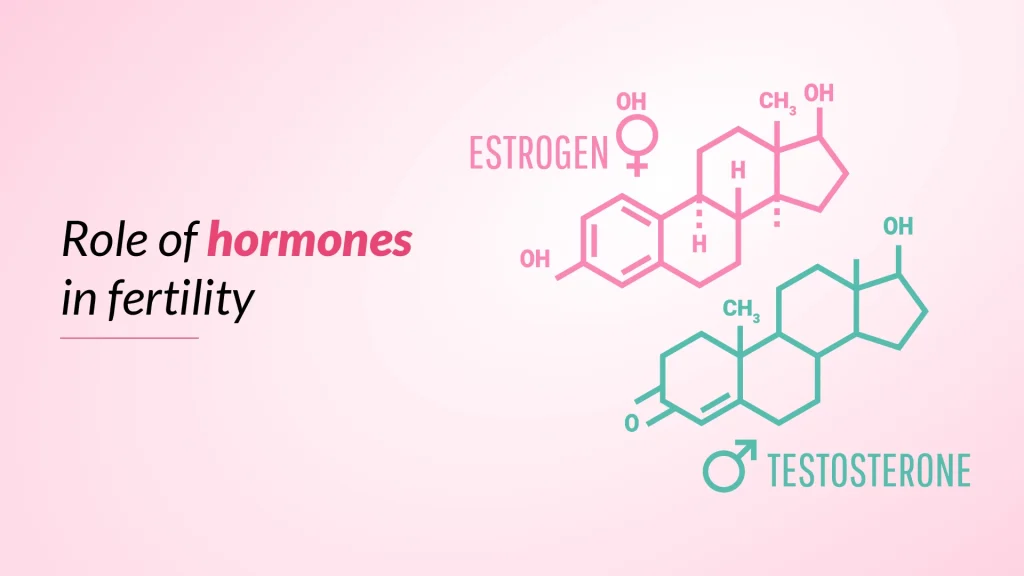
6. Testosterone (in both men and women)
- In men, it supports sperm production
- In women, excess levels (as seen in PCOS) can disrupt ovulation